The Abandoned Plague: Why the World's Deadliest Diseases Keep Finding New Homes in the World's Poorest Places
Author: owner | Published: 2026-05-21
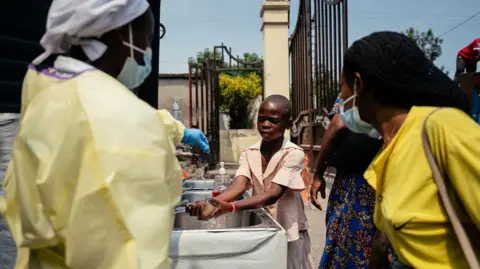
Dr. Peter Stafford had been treating patients in eastern Congo for three years when he got the call no doctor wants. A patient at Nyankunde Hospital was dying. The surgery was routine — or so he thought. The patient who lay on his table that day in May 2026 was "very sick," according to his colleague Dr. Scott Myhre. Stafford operated. The patient died. And then, slowly, Stafford began to feel it himself. Fever. Aches. Chills. The kind of fatigue that makes you think you've simply worked too hard. He got tested. He was positive. By the time anyone realized what was happening, Stafford was sealed inside a plastic isolation bubble, loaded onto a U.S. military aircraft, and flown to a base in Germany. His wife and children were already in quarantine, awaiting evacuation. Stafford was one of the lucky ones. He had access to a military-grade medical evacuation system, a biocontainment unit, and some of the best infectious disease specialists on the planet. He had something else, too: he was an American. The patients he had been treating in Ituri province — they had none of this. Let me tell you about the Bundibugyo virus. In 2007, a strange new strain of Ebola emerged in a remote district of Uganda. It killed 37 people out of 149 infected. In 2012, it appeared again in the Democratic Republic of Congo. It killed 29 people out of 57 infected. The world's scientists took note. They identified the virus. They sequenced its genome. They understood exactly how it worked. And then they... waited. Eighteen years later, the Bundibugyo virus has returned. This time, it's spreading through eastern Congo's Ituri province, into the mining town of Mongwalu, toward the regional capital Bunia, across the border into Uganda's capital Kampala, and into the city of Goma — a rebel-controlled metropolis of 850,000 people on the Rwanda border. The death toll stands at 136 and climbing. There are over 600 suspected cases. Scientists now believe the actual number could exceed 1,000, since the virus had been spreading undetected for weeks before anyone realized what they were looking at. Here is what makes this outbreak different from every other Ebola crisis you've read about in the past decade: There is no vaccine. There is no treatment. There is nothing. Dr. Abraar Karan, an infectious disease physician at Stanford University, calls it "a perfect storm." He's not wrong. But the storm isn't just about the virus, the conflict zones, the displaced populations fleeing M23 rebels, or the communities that believe the disease is witchcraft. The storm is that we've known about this virus since 2007, and the world couldn't be bothered to develop a single drug to fight it. Think about that for a moment. We developed multiple COVID-19 vaccines in less than a year. We had Operation Warp Speed. We had billions in pharmaceutical investment. We had motivated researchers and guaranteed markets. The Bundibugyo virus has been killing people since George W. Bush was president. In that time, we have developed exactly zero vaccines and zero treatments specifically for this strain.