A 12-Year-Old Was Slapped Until He Wanted to Die. The Teacher's Defense? "I Was Educating Him."
作者: owner | 发布时间: 2026-06-03
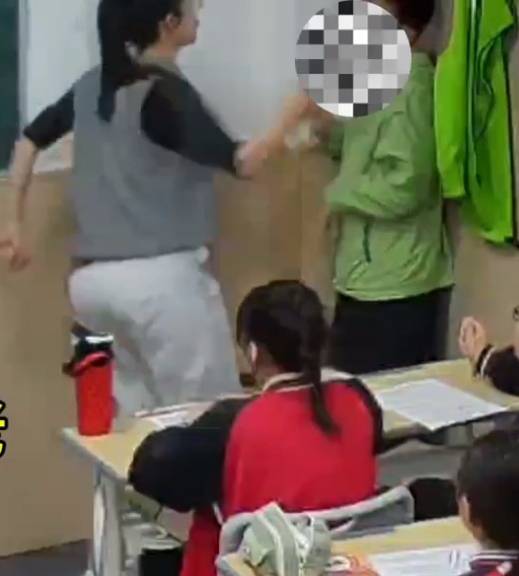
A 12-Year-Old Was Slapped Until He Wanted to Die. The Teacher's Defense? 'I Was Educating Him.' The 12-year-old boy was holding a toy knife. That was the entire offense. On May 21, 2026, in a 托管所 (a private after-school daycare center) called 淏文 in Tongchuan, Shaanxi, a teacher named Zhu saw the boy playing with a toy. When the boy refused to hand it over, Zhu pushed him into a corner. Then he hit the boy — twice on the left shoulder with his right fist, twice on the left cheek with his right hand, once on the left leg with his right foot. Half a minute later, Zhu dragged the boy to the ground. The boy grabbed his head. The boy went back to his regular school, sobbing to his homeroom teacher. He told his father. The father called the police. When a reporter from Jimu News reached Zhu to ask what had happened, he hung up. He refused to apologize. When asked about the slaps, he said one thing on the record: "扇脸是在教育孩子" — "slapping the child's face was educating him." That's the defense. Not "I lost my temper." Not "I shouldn't have done that." "I was educating him." That is the system. The Tongchuan Xinqu police issued a decision on May 28. Citing Article 51(2) of the new 2026 Public Security Administration Punishments Law, they gave Zhu 13 days of administrative detention and a 1,500 yuan fine — about $210. Thirteen days. Not 15 — the legal maximum for hitting a child under 14. Not criminal charges under Criminal Law Article 260, the "abuse of a ward" statute (虐待被监护、看护人罪), which carries up to 3 years in prison. The local 教育局 explained the outcome: the case "does not reach the threshold for criminal prosecution." The medical record says "急性外伤头痛" — acute post-traumatic headache. The boy, his father said, has since said "几度想轻生" — multiple times he wanted to die. Apparently, none of this counts as "情节恶劣" — "circumstances serious enough for criminal liability." Apparently, "I want to kill myself" is not serious enough. Thirteen days. 1,500 yuan. That's the cost of telling a 12-year-old he wanted to die. The "出于教育目的" defense This defense is not new. It is the most powerful get-out-of-jail card in China's child abuse cases, and it has been working for years. The defense works because the system asks the wrong question. The system asks: "Was the adult's intent educational?" It does not ask: "Did this hurt a child?" The first question gives the adult a way out. The second question would not. In September 2025, the Jinan 育英中学 case gave us the textbook example. A junior-high homeroom teacher named Tian slapped a student. The local investigation concluded: because the slapping was "出于教育目的" (for educational purposes), it "did not constitute subjective intent to abuse or harm," and therefore was "未达到刑事立案追诉标准" — did not meet criminal prosecution standards. That teacher got 记过 (a demerit) and was transferred to a different role. No detention. No fine. No criminal record. In the Tongchuan case, the same defense was used. The same logic was applied. The result was slightly harsher — 13 days, 1,500 yuan — but only slightly. The teacher who was "just educating" went home in 13 days.